Thursday, June 11, 2009

Architectural Hygiene

With growing innovations in building materials and technology, coupled by availability of clients (before recession) from equally inflated economies, we as architects and designers (before recession) could not only imagine formal atrocities but even get them built (before recession). Architectural audacity (before recession) was being redefined with every passing day (before recession) through projects (before recession) that twisted, turned, gelled, splintered, bent, flowed and did many other things, evolving from an agonised belly of an architect, it looked like sports shoes, toothbrushes, space crafts and now they have to be kept clean!
This post I dedicate to the window cleaners who keep architectural megalomania clean. I can almost imagine their CVs shining with a list of building facades they have cleaned with only the best cleaners having survived through a Zaha Hadid.

(Sage Music Centre at Gateshead UK designed by Fosters & Partners, Buro Happold, Mott MacDonald and Arup. Image sourced from BBC)

(Reichstag dome in Berlin, Germany designed by Norman Foster. Image from daylife.com)

(30 St Mary Axe or the Gherkin designed by Norman Foster. Image sourced from www.dailymail.co.uk)
I don't know how most of the photographed images happen to be of Norman Foster projects, maybe his clients maintain highest levels of Architectural hygiene (?) But one must admit cleaning contemporary architecture must be an experience that needs to be packaged and sold to the presently redundant architectural community, like archi-adventure sports. This would not only make a great enterprise but also allow to truly subvert and critique the architecture (Interesting read by David Gissen on HTC experiments in reference to Philippe Petit's tight rope walk between the World Trade Centres) by staging a 'time to clean your act up' art performance.

Monday, June 08, 2009

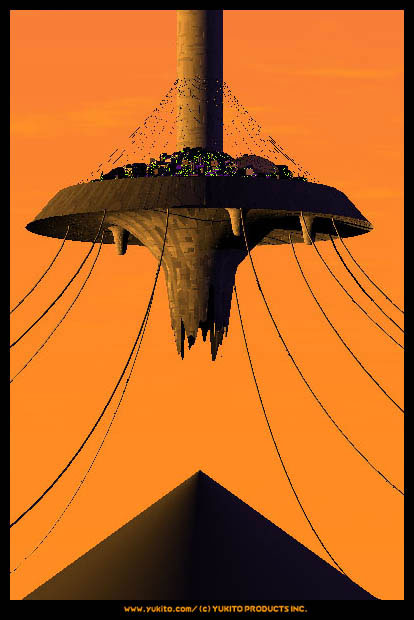
Of Ships, Dreams & Tiphares


(Ships at Sitakunda ship breaking yard in Bangladesh)

(Ships stacked together at Chittagong in Bangladesh, some more information related to the agencies, policies and different stages of ship breaking in Bangladesh is available here)


(Ships at Alang ship breaking yard in India. For people wanting to pursue researching on Alang, KRVIA has done a very good study of this place. Some more information here)
Like beached whales, these rusting giants of the seas come to breathe their last in the ship breaking yards of Asia. These Elephant's graveyards formed out of devouring and recycling these Goliaths lie at the extreme margins of the world, where cost of labour and environmental policies in contrast to the rest of the world facilitate exploitation. At present, most large scale ship breaking yards are in South Asia and specifically in:
India (Alang)
Pakistan (Gadani)
Bangladesh (Chittagong, Sitakunda)

Like the city of Tiphares from Yukito Kishiro's Battle Angel Alita ("A megalopolis 'Tiphares' in the air soars in the sky, and the town of scrap 'the Scrapyard' iron extends under that") , these terrains survive on the waste dumped by the floating world that upholds its morals of sustainability and equality by outsourcing the opposites to far off horizons away from its cone of vision.
Interestingly in Of other Spaces Foucault writes "...the boat is a floating piece of space, a place without a place, that exists by itself, that is closed in on itself and at the same time is given over to the infinity of the sea and that, from port to port, from tack to tack, from brothel to brothel, it goes as far as the colonies in search of the most precious treasures they conceal in their gardens, you will understand why the boat has not only been for our civilization, from the sixteenth century until the present, the great instrument of economic development (I have not been speaking of that today), but has been simultaneously the greatest reserve of the imagination. The ship is the heterotopia par excellence. In civilizations without boats, dreams dry up, espionage takes the place of adventure, and the police take the place of pirates." And if this is true then one can only imagine these spaces where boats (that are the very representatives of dreams of escape) are torn to pieces by the same prisoners (informal labourers) yearning to flee from these poisoned lands.

(image from http://www.cqc.org/gallery/keyday05/ which according to me is one of the very few good photographs available on the internet taken at Alang ship breaking yard)
But all these dialectics aside, I have never had the opportunity to go to any of these places, but I can imagine the sheer scale of these ships and human bodies working on them along a waterfront that keeps changing its configuration everyday as ships get cut into smaller pieces and new ships arrive. I am also curious of the nature of landuse and typologies where most population is informal labour, with skewed sex ratio and other population statistics that will give contemporary planners and urban designers a nightmare. But at the same time I instinctively want to believe that geographies like these that lie on the margins of our society may have within them clues for a completely new form of production of space.

Saturday, May 30, 2009

Thrilling Wonder Stories: Speculative Future for an Alternative Present

Of recently with a lot of time on my hands, contemplating the future (mine and my design career's) is one of the luxuries that my unemployment status entertains. And now that I have jumbled together words like future, design, contemplation, etc with the cunning use of commas, it would be worth elaborating on The Thrilling Wonder Stories ,a symposium co-ordinated by Liam Young (AA INTER 7 / Tomorrow’s Thoughts Today) and Geoff Manaugh (BLDGBLOG). The list of Speakers was:
1) Geoff Manaugh
2) Peter Cook
3) Vicktor Antonov
4) Squint Opera
5) Ian Macleod
6) Nic Clear
7) Jim Rossignol
8) Warren Ellis
9) Francois Roche and Stephanie Lavaux
Consisting of collection of presentations, interviews and group discussions chaired by Geoff Manaugh of the BLDGBLOG. I had the opportunity to see the first 6 speakers talk on the relationship between the built environment, architectural design and speculating the future through the medium of images, movies, gaming environments and literature.

(seminar poster from the AA website)
Geoff Manaugh with his extremely fertile mental archive of things big and small, of cities, images, translucent concrete, living glass, interview with Lebbeus Woods, Science Fiction of H.G. Wells, Jules Verne, Étienne-Louis Boullée's Cenotaph for Newton to SMLXL was able to vividly lay foundations for the intent and direction the discussions of the day would assume. His pitching the idea to a predominantly architectural audience as need for Architecture (which as a field strategically positions the architectural community to dwell within mixed careers) to mutate through the recession and create alternative careers, according to me was a very encouraging start.

(image from Design Museum website, Archigram section. The image was done by Ron Heron)
There could have been no better person to talk after such a talk than Peter Cook, the pioneering spirit of Utopian futurism within Archigram. Having heard his talk before, most of his presentation sounded vaguely similar, with borrowings of personal experiences, Avante Garde Radicalism and last but not the least Gossip. But he made one very interesting point, he said "the architectural profession has a moral responsibility of provocation, pushing the boundaries of our field and if it isn’t that, we can all just leave it to the computers and go home to do something more rewarding". Here what interested me is not the provocation and radicalism part but the possibility of leaving everything to the computers. I remember few days back when my friend Kostas was talking about a Utopia where what would it be if we could leave everything to the machines and could there be a society that did not NEED to work but CHOSE to work (or not) in what interests the 'spirit' (?). Peter Cook's advocacy for radicalism though encourages experimentation, it also tends to ascertain radicalism as having an aesthetic rather than a theory, and by complete coincidence it seems to be along the lines of Archigram.

(one of the stills from the animation Renaissance, from Vicktor Antonov's website)
Vicktor Antonov's ideas of designing Fantastic Capitals of Urban utopias, their representation through different styles of renderings and infusing the geometry of design with layers of multiple subjective perceptions was quite interesting. His intention to capture the spirit/rhythm of a city through renderings that do not actually correspond to a particular city geography or do not hint any urban landmark but just get the image of the city, was also quite an interesting exercise. Inspite of him coming from a background of graphic design and gaming, he made points that were clear, precise and extremely structured. He explained his methodologies for speculating future utopian geographies as adding "What if..." within the historical narratives of the past, present or somewhere in the future, (with some interesting examples provided by Geoff with regards to mutational moments in time or material revolutions) that allowed one to imagine multiple parallel strands of realities...what if the Romans had structural steel? opening up whole new possibilities to envision Roman Architecture and its implications on the present. His examples of his ongoing animation project The Prodigies and already released movie The Renaissance are something that I would like to follow up on when I do get an opportunity.

(Book cover of Song of Time authored by Ian Macleod for which he received the Arthur C. Clarke award in 2009, sourced from his website)
The next speaker Ian Macleod's talk on the difficulty of writing about the future and science fiction today was the point in the seminar when the conclusions actually started forming a more comprehensive and realistic structure. He said the utopian spirit of the past allowed for writers to write and readers to 'buy' into ideas of cheap space travel, cure for diseases, eradication of poverty and mankind finally having solved the energy crisis and settled in a state of equilibrium with nature, but the future has become the present and now we see most of the predictions have not been met, this is a future that readers don’t buy into today. His exercise of writing science fiction with kids proved that most future predictions were dystopian Ballardian visions. But none the less he did take efforts to end his talk on a positive note as he read a text written by student which ended with..."But the moon is not that far away..."
Nic Clear who teaches at the Bartlett, (this is when I realised the difference between the undergraduate and post graduate programmes) according to me was an absolute star in the seminar. He was the one who actually anchored the future speculations into the present by talking about the methods of production of spaces and how architects today have rather aggressively embraced capitalism. He spoke about the architect's future being completely utopian not as a matter of belief but more out of a need to sell. On the other hand the writer's speculations of the future tend to balance between being utopian and dystopian, like J G Ballard's writings (here is a very good interview with Nic Clear by Ballardian).
Squint Opera who came after Nic Clear being an agency that works towards making happy-pink renders exquisitely done for the architect and his clients, turned into one such example of what Nic warned about! And their defence seemed to be "it depends where you look"...
The seminar was inspiring and very well co-ordinated, it encouraged people to think and formulate their ideas for "What if" interventions within design (a field that has no boundaries and can flow through different disciplines assuming different forms of media)...and it just might be that even in these difficult times, we can say to ourselves "the moon is not that far away"...

Wednesday, May 27, 2009

Mapping information


(image from Guardian, and found posted on Francesco Mugnai's blog which also contains other diagrams that are as interesting and varied in terms of the data and audience)
Going by the present day complexity of information, and the datascape born out of such vast information-static, it isn’t surprising that info graphics / data visualizations have become important fields that take up the responsibility of dataxonomy of this networked society.

(Facebook's friend wheel application generated my social network)
The diagrams are maps of information, relation and network of different things communicated based on easy readability of graphics and ability to generate clear analysis, for example the Facebook's friend-wheel application created by Thomas Fletcher, which uses links between various Facebook profiles to generate a diagram that shows various 'friendly' linkages within your Facebook-social circle. If one adjusts the outcome to be shown as a heat diagram one can see which of your friend is friends with maximum people in your circle (besides you, some do get confused with that).

(Greater London's Spatial Accessibility Model developed by Space Syntax)
The applicability of data visualization on the built environment has very well been proved by the growing demand for GIS software but one such practise that is able to actually use this empirical data for analysis and logic of intervention is Space Syntax started by Bill Hillier in 1970 (through a research programme in the Bartlett, UCL). Space Syntax uses on ground data of pedestrian-vehicular movements, frontages, road widths, landmarks, etc to create diagrams of accessibility, efficiency, crime etc. This spatial analysis gives rise to key challenges for the intervention and also ability to test the design through simulated data tests of the new circulation and behaviour the intervention would generate.

(Mark Lombardi's Sociogram pencil drawing found here)
In the field of Arts, I found some interesting work by artist Mark Lombardi (1951 - 2000) which deals with Sociograms of George W. Bush, Harken Energy and Jackson Stephens (drawn around 1999) as neat pencil drawings of network that connects global capital, oil and weapons trade, backed by loads of research and access to information that he was able to enjoy as the curator and director of museums and general reference librarian for Fine Arts department in Houston Public Library. The work is clean and extremely powerful, no Meta narratives or any post-structuralist abstractions of angst ridden paint strokes but only clear objective information map. But this does not mean there is no space for subjectivity, the subjectivity comes from the choice of subject and the logic of graphics selected to communicate a singular clear analysis.

(print spreads from Jonathan Jarvis's The Crisis of Credit Visualized animation as available on his website)
Another name that comes to my mind is of Jonathan Jarvis an interaction and media designer, whose video The Crisis of Credit Visualized as explained on his website, "distils the economic crisis into a short and simple story by giving it form. It is also argues that designers have the ability to see a complex situation, then turn around and communicate it to others. By giving graphic form to the credit crisis, it becomes comprehensible. Not only do economic activities take shape, but new relationships can emerge between these shapes". For people unclear about the credit crisis and animation lovers alike this video is a very good watch. The no frills simplicity maintained in the animation reminded me of the good old days of Doordarshan educational animations like Ek Chidiya, Simi Machli and Tree of Unity cartoon that spread principles of socialism.
In Architecture work by OMA & AMO on different global statistics, networks and diagrams is interesting and the data represented is able to build an interesting picture of the world we live in. But I am not sure if the Post modern point of view to pollute the structural dialecticism is out of choice or just out of need of Rem Koolhas's practise.
As my sense of affiliations constantly sway between need for subjectivity (as in my previous post on Peter Doig) and objectivity in my present post, I feel it even more important to be strategic about these two 'weapons of choice' based on the context that we seek to intervene in. Ofcourse these two polarities are constantly polluting each other but the consciousness of the nature of final result as being objective with certain subjectivity or subjective Meta narrative based on certain universal objective truths is an important choice. It is about knowing if one wants to author A City of Slums or a Shantaram. But with cities and our struggle to map them we can never be sure...

Saturday, May 23, 2009

Buried Treasure of Bomb Bay

Around 1940 two men Madhukar Vaidya and Pandurang Achrekar worked at the Bombay Docks. Every month they brought back with them their nominal wages and loads of stories to their families. Port stories of smuggling, tax evasions, fire and many more, of this geography that got touched by vessels and ships that came from far off magical places. These stories were passed on from them to their children and finally inherited by the grandchildren. One such story that I had vague memory happened to resurface in Suketu Mehta's Maximum City: Bombay lost & found. A story which grandfathers working at the docks unfailingly describe to their grandchildren as the day it rained gold bricks, the day of SS Fort Stikine (14th April 1944). Mehta describes:
“The disaster of the Fort Stikine is with us still. Bars of gold from the ship were being found as late as the 1970s, during dredging operations at the docks. But there was a mountain of more base debris from the explosion, and the British municipal authorities chose to create a landfill out of it. They started filling in the Back Bay, where the mangroves used to be, in what is now Nariman Point..."
Thus the raining gold bricks from Fort Stikine laid the foundations for the development of highest commercial real estate rental space in the world (1995 @ $175 per square foot or $1880/sq. m.). This was also a point in time when the War actually touched Bombay, as it was the smuggled ammunition/explosives cargo that caught fire and was responsible for such a big explosion. My grandfathers described this incident to me as experiences at ground level, which I tend to imagine with sepia tints, of the sound, the smoke, the debris and most of all the gold & silver. For me this is one of the very few stories where personal, urban and global histories collide into a single narrative of conspiracy, buried treasure and everything else that makes cities & its people
...And to this day somewhere in the water lies a buried treasure waiting to be discovered by the brave soul who can swim through human faeces, industrial waste, Ganapati clay, animal carcasses, plastic bags, feathers, dead beggar and other day to day things that we choose to avoid direct confrontations with.

Tuesday, May 19, 2009

Bombay Meri Jaan


Las Meninas: I lived in Bombay for 25 years or a fourth of a century, in units of historians for whom time and space have to be encapsulated in magnitudes that allow for comprehension of change, like the slow motion capture of movement of plants by David Attenborough. My visit to Bombay after almost a period of two years is like a stop motion animation that simulates movements through the recording of frames of differences, between what was and what is, with me constantly collecting differences in the name-place-animal-thing and everything else that changed or moved. A new building along the corner, a redevelopment of a club, a new gate, new shops, lesser trees, more dust and everything as aggressive as it is supposed to be in this city exactly the way I left it. When I was away from it, I lived in its nostalgia, romanticizing the informal (which I believe is our only way to reconcile with exploitation so obviously before us and our helplessness to do anything about it), talking about The Alternative (our only sense of hope and redemption, hinged on a typology detail.... takes me back to my school days) and schemes, strategies and tactics (our means of avoiding direct confrontations and giving Guerilla warfare a bad name); but now the brackets seem to antithesis the words, like the thin layer of heat-dust that seems to bother me where ever I go, my very own, personal spores of blame.
Maybe I am in a state of Diego Velázquez’s Las Meninas where the mirror keeps switching the object, artist and the observer, mixing subjectivity and objectivity into a yin yang polluting every argument, rhetoric or fact that I knew. But as John Berger (Shape of Pocket) puts it, the best paintings are the ones where the artist and the object fused together into an inseparable mass of narratives, maybe these blind spots within my experience of Bombay may provide for some new method/perspective of mapping.
Mapping: While I am on the topic of mapping, the predominant nature of interventions being carried out within Bombay’s academic circles seems to be of mapping, if mapping is indeed an intervention (I have begun having my doubts about that). Like multiple individuals with different cameras with varying focal lengths, zooms, filters we continue to map the city from various vantage points, some through our professional sphere and some as a personal indulgence, but we map, tirelessly. The data gathered in the Mumbai Reader alone is more than enough to provoke all sorts of interventions, but unfortunately through fire and floods we wait with expectations and nothing happens. The maps form an archive and the archives a museum, with no repercussion within the context that we map so tirelessly.

In this city, mapping seems to be a tool to keep 'thinking' interventionists pre occupied through strategic deployment of culture capital and prevent us from getting militant! (This too is a fucking joke, when it comes to the bourgeois, holding candles, flowers and hands like a bunch of fools, appropriating Gandhi as and when possible. Like Zizek explains Gandhi's tool of Non-Violence for those times and situation was extremely violent, it WAS very much an intervention that made a DIFFERENCE. Today it has turned into a circus). If the exercise is mapping for the sake of mapping then it is a different issue, but if not then I strongly believe we need to know why? And who is the audience? Or else it is just a process of intellectual bartendering of theoretical - cocktails and circulating knowledge within restricted social circles, with mapping reduced to an exercise of creating aesthetics rather than a tool of active intervention (maps created by the Situationists). At this point in time, I believe we desperately need something new…

Mumbai Reader: Talking about new... after coming home I saw the copy of Mumbai Reader (UDRI publication), it was at least 6 times fatter than what I was expecting (which in case of books is a good thing), but I just couldn’t help but notice every article, every paper clip being a well articulated rant, furnished with excellent data and concluding with the most elaborate declarations of helplessness by Architects, Planners, Social scientists, Lawyers, Political activists etc. Makes me wonder if we are always going to be helpless within our professional spheres or is it that someday we may turn into Arvind Adiga's White Tigers, born just once per generation a rare spectacle! But all this militant revolutionary spirit aside, the Mumbai reader looks very promising. It has some clear articles with on ground conditions and concerns, written by people selected due to their expertise in a particular field and not necessarily because of their linguistic or theoretical manoeuvrability, so most articles have a ‘reporting’ flavour. This according to me is a good thing, as for everything else we always have the Delhi reader.

The paper used for the reader as well as the overall dimensions are just right, it looks good and reads well, but once in a while I wonder why is it Mumbai Reader and not Bombay Reader (stamped "read Mumbai where Bombay" just like in government documents that required to be changed).

Map: On one of these days, while surfing through the net, I came across a Mumbai train map like the London tube network diagram. This seems to be a clear indication of the expansion of Bombay city as imagined by the government and the global-powers that are facilitating it. Clearly Bombay is going to be 'under construction' for atleast a decade. I don’t know how inserting so much infrastructure is ever going to be possible?

Cable TV: After a really long time of not having any access to TV, I was relishing the idea of surfing through thousand cable channels and watching TV, lying immobile for hours with my retina basking in the light of the tube. But unfortunately that wasn’t the case, I just couldn’t relate to TV any more, not even information and News channels. I feel never before has Bombay been more in need of thousand cable channels than right now. The TV is a machine in itself that compensates for everything that the working class here needs/desires.
It is Space: Lush gardens, foreign locations, bungalows and constantly renewed extensions to the private homes that watch it, like a small shack in a slum, an apartment house in Bhayander, a terrace flat on the 21st floor in Bandra. Like a small window aligned along a wall or splayed along the corner, it creates new spaces within homes of families mesmerized by the electronic light that is deployed to entertain illusions of life. It is the classic virtual Recreational Ground, much required in a city that has lost most of its open spaces. This space is the Garden, the Theatre, and the Circus - heterotopias balancing the city of discontent.
It is Surveillance: If London has its CCTVs, Bombay's Panopticon turned inside out -the TV belittles all forms of social control through a fantastic inter-pixilation of entertainment and self surveillance. Here all narratives across channels have the capacity of assimilating the flickers within society and plot against anyone trying to break away from this Rooster's coop. Here the Law brings every murderer to justice (and with a commentary by a really scary voice), Companies promise gifts of chance (and you may just be the lucky one!), Sports turn into Gladiator matches (opened just to distract people from fall of the Senate/Democracy) and women, children and men from good families suffer from guilt due to their wrong doings.
It is Religion: Like Nietzsche's Master-Slave morality, every character is ascertained as being heroic or villainous based on the difference of morality. Master (the villain) morality weighs actions on a scale of good or bad consequences while slave (hero) morality which weighs actions on a scale of good or evil intentions. This good slave morality preached by every religion- ‘opium of the masses’ now has a new Adhan and Altar- the TV.

Elections: The only thing that I did or rather could watch on TV was the election politics that had reached its final frenzy as the day of counting approaches. With electronic voting machines, a budget of over Rs. 1,120 Crores (election expenditure) and a massive population, this election was a spectacle in itself. Advertised as the opportunity to make a difference (15th opportunity mind you!) by celebrities, believers and non-believers alike practiced their right to Indian Democracy. Meanwhile the 'wooing' and 'mud slinging' by the future representatives of our country had the strength to completely nullify the pro active campaigns by the media like Bleed India and Jaago Re and encourage a few thousand more to dwell in apathy over the state of affairs. But the overwhelming majority which the UPA received was quite surprising and to some extent a positive development.

House on a Hill: One of the highlights of the trip was a long drive to outskirts of the city a trip to my father's utopia- his farm house, an orchard and lot of sun. The drive was very nice with me noticing the new 'interesting' things, photographing trucks, rickshaws and trees as they had never existed before. After the aggression, heat and dust inflicted by the city, this was a good space of refuge, where I could wander around aimlessly, photograph farm-flora & fauna and laze around reading, while my father played out Charles Darwin to every shrub, tree, plant and bee that had evolved in his path. He was happy here, making it a point to personally introduce me to every member of the plant kingdom with its characteristics, growth and sometimes even spiritual classifications. I duly photographed each specimen and asked inquisitive questions.
Meeting my family after a long time was like recharging my sense of hope and belonging. But sometimes I do feel a certain sense of urgency with regards to making it big and getting things right. Meeting up with friends was good. Met up with Prajna, Rupali, Prasad, Ranjit, Mukul, Rohan, Kiran, Vishal and Siddharth...all of them having been there for me through good and bad times in my life. I have realized there are no real choices in life, but only an illusion of having choices, all roads lead to the same place, a place where free will is a farce. With sophistication, most deviants have been institutionalized and the city sterilized. Probably this is the time that we from collective turn into individuals struggling separately in our individual “Pursuit of happiness”...or maybe all of this is not true, its just the heat-dust...my personal spores of blame...
Salaam Bombay.

No man ever steps in the same river twice, for it's not the same river and he's not the same man.
-Heraclitus

Friday, May 01, 2009

Work in Middle East

The work in the Middle East is a constant process of reconciliation, between concerns of the local context and an extremely aggressive global market, between the client and the designer and finally between conscience and needs. The practise of design becomes even more amplified, where one has to come to terms with the inherent disjunction within the practise of designing the built environment and attempt to construct imaginations that become the very representation of this reconciliation.


Wednesday, April 29, 2009

Swine Flu Attack!

The combination of Umberto Eco's Foucault's Pendulum, recession's blow to my job and many other things that turn one into a roller coaster of contemplations and self reflections often gives rise to delusional ideas of everything being connected to everything. And somehow the sudden outbreak of a deadly H1N1 just around the time when people had started taking notice of failure of the state, financial institutions and environment comes across as a classic case of 'history repeating itself'. As if an integration of infinitesimally small measures of individual greeds give birth to a singular entity that forms the powers that be, the puppet master, the butcher to the Roosters coop controlling strings of debts and levers of information flow to create heterotopias, distractions and decoys that can be put to use through terrorism, climate change, disease and most importantly a real time media onslaught of these events as they unfold.
An old article by Paul Mickle in an American newspaper, ‘The Trentonian’ with the headlines 1976: Fear of a great plague, reported:
“On the cold afternoon of February 5, 1976, an Army recruit told his drill instructor at Fort Dix that he felt tired and weak but not sick enough to see military medics or skip a big training hike. Within 24 hours, 19-year-old Pvt. David Lewis of Ashley Falls, Mass., was dead, killed by an influenza not seen since the plague of 1918-19, which took 500,000 American lives and 20 million worldwide. Two weeks after the recruit's death, health officials disclosed to America that something called "swine flu" had killed Lewis and hospitalized four of his fellow soldiers at the Army base in Burlington County. The ominous name of the flu alone was enough to touch off civilian fear of an epidemic. And government doctors knew from tests hastily conducted at Dix after Lewis' death that 500 soldiers had caught swine flu without falling ill. Any flu able to reach that many people so fast was capable of becoming another worldwide plague, the doctors warned... Thus was born what would become known to some medical historians as a fiasco and to others as perhaps the finest hour of America's public health bureaucracy.... Among other critics are Arthur M. Silverstein, whose book, "Pure Politics and Impure Science," suggests President Gerald Ford's desire to win the office on his own, as well as the influence of America's big drug manufacturers, figured into the decision to immunize all 220 million Americans... The Great Plague, as it came to be called, rivalled the horrid Black Death of medieval times in its ability to strike suddenly and take lives swiftly. In addition to the half million in America, it killed 20 million people around the world. It got its name because it was a brand of flu usually found in domestic pigs and wild swine. It was long thought to have come, like so many flu, out of the Chinese farm country, where people and domestic pigs live closely together...”
Maybe it’s just Umberto Eco and my mind playing games or maybe it’s really a pandemic and we should be wearing masks, washing hands and sitting at home, whatever the case, but with the following swine flu advt. we shall certainly not need to spend any money on the campaign!

Wednesday, April 22, 2009

April 21
on the 21st of April, the 111th day of the year, a day before the Earth Day and 20 years after the Tiananmen Square protest, a group of scientists announced the Sun has gone dimmer and quieter than it has been for a century, the IMF declared a much deeper recession ahead, an important luminary fell on Avenue des Champs-Élysées and I was made redundant.
Back to square one, negotiating, adjusting, trying, craving for an idea of success.
Redoing, rephrasing and refusing.
A new exo-planet is discovered
and a new chapter begins.

Friday, April 17, 2009

Design Competitions

Years back when I was much younger than I am now, I had written about competitions as a tool that facilitates freedom from existing structure of our practise. This brief state of professional suspended animation that provides one flexibility to assume additions and subtractions to ways of the world, carries with it potential to discover, invent and conceptualise a new system of producing space (and by this I do not mean parametric modelling, but I do pray once in a while that someday if not an interesting form, all that scripting may atleast result in a virus capable of bringing down the system). Hoping that possibly within these heterotopias of the design practise (design competitions), professional deviants and hopeless design romantics might discover the Holy Grail of Design of Space I plan to take part in two upcoming International competitions. Lets see if we can have the Susan Boyle effect as well!

Tuesday, April 14, 2009

Edinburgh


(source: Edinburgh tourist guide map)
If any city can claim to inspire magic, it is Edinburgh. Here History finds solace within crevices of tectonic plates, near lava mounds, between valleys, above dead volcanic mountains, along the river & shore and everything else sculpted and chiselled by Geography. This aventure amoureuse of the narrative and the terrain forms a compact jigsaw in the city centre making the entire city walkable and therefore encouraging exploration of every nook and corner to its fullest. The castle, the port, the galleries, the parliament and gardens and bridges were some of the many nooks and corners that my & Nora's feet trod along a span of three days. My well trained sense of misdirection and Nora's inbuilt GPS capacity to absorb city geography, maps and directions as a combination, facilitated us covering more ground but with style.


The first day was spent in visiting the Princess garden that sits within the valley dividing the new city and the old city in the centre. The lowest point in the valley accommodates the rail tracks that cut in between the green slopes that hide the city. The old city, sitting along a rising slope comes across as Les Triplettes de Bellevillian city shot with diverse elevations arranged one over the other.

The exploration of The Royal Mile with its sloping cobbled streets, incidental public squares and an occasional view of the castle, the sea and Arthur's Seat was an absolute pleasure. All these experiences were constantly punctuated by etchings on wooden benches, names on trees and a huge number of cemeteries with old tomb stones turning the city into a depository of memories of names, people, friends, families and loved ones all long gone and immortal at the same time.

The city was once a home to writer Robert Louis Stevenson and I could only imagine its influence in his classics like The strange case of Dr Jekyll & Mr Hyde and Treasure Island.


The second day began with the climb to the Edinburgh Castle which provides some great views of the city. The castle madly reminded me of Hayao Miyazaki's Laputa: Castle in the Sky illustrations further reinforced by the illustration on the tourist guide map. The visits to the National Gallery of Scotland proved extremely fruitful. This gallery has some really good paintings by El Greco, Rembrandt, Cezanne and Diego Velazquez.

The next on the itinerary was the Scottish Parliament designed by Enric Miralles, which is one of the few parliament buildings that seem to merge in scale with the surrounding landscape, sits in close proximity to the rest of the urban fabric and has an image made up of collage of various elements that are in complete contradiction to the State's image of power and authority, which makes this a building a good example of architectural interpretation of true democracy. We ended the day at the port which is an antithesis of the city centre, an eerie space confused by negation of history and planting of a multi complex shopping mall giant of a building along the water front.

The third day was invested in visiting the Scottish National Gallery of Modern Art flanked by a Landscape design done by architect Charles Jencks, which was discovered by us during the trip. But most surprising was an amazing collection of art works the gallery had put together for a temporary exhibition. This was the first time I got to see Damien Hirst’s art works, Away from the Flock, Grey Periodic Table, Pharmacology- Physiology- Pathology, Monument to the Living & Dead, Something & Nothing and the Wretched War to name a few. The works had a certain playful quality about them fantastically packaged with flushed details. Also got to see Man Ray’s Iron with Nails, which was an image I had seen numerous times before but had never seen the object. But it was Ellen Gallagher’s work that I loved the most, a set of images titled Deluxe and madly reminded me of Kaushik’s ‘Unbook’ collages. After this a quick visit to the Dean Gallery across the road and marinating ourselves in bit more of art, we were ready for some evening wine and oysters.
I don’t know if it was the spring weather, my own craving for a break from London or something else, but the city of Edinburgh was just beautiful, probably one of the most beautiful cities I have ever seen, no short of magic.

Sunday, April 05, 2009

Abulafia! & Foucault's Pendulum

I had been reading Eco Umberto's Foucault's Pendulum. Its a nice book and left me very inspired. Not so much by the plot, the linguistic manoeuvring or the humbling intellectual self index of his knowledge but by The Plan a product of a programmed Abulafia! Abulafia- a fantastic device capable of assimilating disparate texts from scriptures, pop culture, age of reason to insanity into strings of comprehensive and almost convincing conspiracy theories. Like Musikalisches Würfelspiel to create music!
Inspired by all this, I wordled (A "Wordle" enables you to see how frequently words appear in a given text, or see the relationship between a column of words and a column of numbers. You can tweak your word "clouds" with different fonts, layouts, and colour schemes) together some of the most influential speeches of the 20th century, which you may find here. The speeches are:
1) We shall Fight on the Beaches by Winston Churchill
This speech was delivered to House of Commons on June 4 1940

2) A Tryst with Destiny by Jawaharlal Nehru
This speech was delivered to the Constituent Assembly of India in New Delhi on August 14 1947

3) I have a dream by Martin Luther King
This speech was delivered on August 28 1963 at the Lincoln Memorial, Washington

4) Ask not what your country can do for you by John F Kennedy
This speech was delivered by John F Kennedy at his inauguration in Washington on January 20 1961

5) An ideal for which I am prepared to die for by Nelson Mandela
This statement was made from the dock at the opening of Mandela's trial on charges of sabotage, Supreme court of South Africa, Pretoria, April 20 1964.

On wordling all of the above speeches together one comes across a word cloud or more of a primordial soup for a very good speech.
Now all we require is a sentence maker to reveal the true capacity of these words to give rise to the right rhetoric or even left, but this is what I came across the sentence maker a tool to teach kids to make sentences. On adjusting the html source to serve our purpose, the sentence maker may be able to assimilate the words below based on programmed syntax of adjectives, adverbs,nouns and prepositions to give rise to a more comprehensive arrangement of words. Maybe cross connecting it with Babelfish we might be able to design the most powerful speech of words, sounds and grammar meaning different things in different languages. I wonder if such a thing like Abulafia is already sitting within one of Googles laboratories with its robotic mind plugged into Google Earth, Search engines, Blogger,Sketch up and numerous streams of data and applications, enabling control over media, money and power.