I left Bombay 16 odd years ago. So every visit, is a snapshot in time. I witness Bombay transforming into Mumbai, a different city from the one I fondly remember growing up in. I often find myself searching for familiarity, an accidental artifact omitted by the wave of reconstruction, a compound wall, a tree, an edge, a gutter, a road, a building even, embedded like shrapnel within the new, accumulating dust, soot and memories. Like China Mielville’s The City and the City, the two cities coexist one renewed other in decay. The street I grew up in has changed from four storeys to twenty storeys, spaces in between reduced to mere offsets. The building that has my childhood home lies in ruins, abandoned and uncared for in light of imminent reconstruction. Views of the surrounding tropical landscape once afforded by these four storey buildings, have been replaced by collage of windows. Windows that bombard you with varying shades of light and sounds from lives of others that look towards you as voyeuring, co-witnesses of an imminent, deliberate, collective tragedy...Only place where my beloved suburban Bombay survives is in my friend, Kiran's home in a small gifted painting, preserved in time for us to reminisce and savour nostalgia of spaces lost.
Showing posts with label India. Show all posts
Showing posts with label India. Show all posts
Monday, March 10, 2025
Friday, May 04, 2018
Curation
For me the act of design constitutes actively engaging with all the tools at one’s disposal, sketching, model making, cad, 3d. Even while one is doing a completely banal task of drafting there are decisions being made of alignments, offsets, widths, heights, proportions. There is rationalisation that takes place of the sketch being turned into a cad plan, and while doing that there is a continuous sense of improvisation, an immersion in the design process. For me an apt metaphor to explain this process is a potter who sits at the wheel, the clay is fluid, it moves, and possibilities emerge in split second on the wheel where the potter engages with the combination of earth, water, air and gravity. This is possible only when the potter “gets his / her hands dirty” in exchange for knowledge of consistency of the clay, its fluidity, the speed of the wheel, gravity and other forces that converge on that wheel at that moment. Like construction lines in cad which may or may not be used but they record a potential that was surrendered for a better one.
When this is compared to the design profession and its hierarchy, there is an attempt to design not by engaging with the tools or the possibilities each tool provokes but through curation. An individual standing far away from the potter’s wheel trying to make pots through a set of potters! Coming from an architectural school that placed strong importance to process, I have come to believe this process is not about making an array of blue foam models by underpaid interns, but a genuine exploration by the designer and the design team. Where the lead designer if there should be one, too should actively engage with the design tools.
The design profession having split into specialisations that arrange the process of producing space into compartments and each compartment requiring a hierarchy to produce (faster+cheaper not better) efficiently, gives rise to a hierarchy which in turn creates this disjunction where the lead designer having more liability needs to split their time across 3- 4 projects, keep tabs on fee burn, alignment with the brief, scope creep, etc. In doing so despite having only say 15% of time to spare towards design process the position is consolidated through the lead having maximum say in the design process. The position is rationalised / consolidated through the design lead’s contribution in the process via curation!
No need to design, just curate design and become a designer!
When I hear people from the design profession exclaim, I do not have patience for Cad, or I am actually a “big ideas” person, or I am just so busy that I have no time for design, etc…I am alerted by this individuals genius that believes idea equals product…(ie. I just need a bunch of minions to realise my vision!)…and then I run for my life.
When this is compared to the design profession and its hierarchy, there is an attempt to design not by engaging with the tools or the possibilities each tool provokes but through curation. An individual standing far away from the potter’s wheel trying to make pots through a set of potters! Coming from an architectural school that placed strong importance to process, I have come to believe this process is not about making an array of blue foam models by underpaid interns, but a genuine exploration by the designer and the design team. Where the lead designer if there should be one, too should actively engage with the design tools.
The design profession having split into specialisations that arrange the process of producing space into compartments and each compartment requiring a hierarchy to produce (faster+cheaper not better) efficiently, gives rise to a hierarchy which in turn creates this disjunction where the lead designer having more liability needs to split their time across 3- 4 projects, keep tabs on fee burn, alignment with the brief, scope creep, etc. In doing so despite having only say 15% of time to spare towards design process the position is consolidated through the lead having maximum say in the design process. The position is rationalised / consolidated through the design lead’s contribution in the process via curation!
No need to design, just curate design and become a designer!
When I hear people from the design profession exclaim, I do not have patience for Cad, or I am actually a “big ideas” person, or I am just so busy that I have no time for design, etc…I am alerted by this individuals genius that believes idea equals product…(ie. I just need a bunch of minions to realise my vision!)…and then I run for my life.
Sunday, March 25, 2018
Disjunction
“We shape our buildings; thereafter they shape us”, is a quote by Winston Churchill. In 1943 after the destruction of the Commons Chamber during the Blitz, the Commons debated the question of rebuilding the chamber. Churchill insisted on the rectangular shape of the older layout was responsible for the two-party system vs the semi-circular amphitheatre shapes being adopted elsewhere. This design to this day forms a key element of British parliamentary democracy.
It is this chicken or egg relationship between the built and us (culture / policy-regulations / politics) that over the recent years has broken down. Architects and Urban Designers are no longer cultural markers with capacity to imagine new lifestyles, new urban environments or new narratives, instead they have been reduced to service providers to speculators. In such a scenario we increasingly see urban environments transform from diverse morphology to a uniform image of banal, increasingly sterile, strongly surveillanced environments. We no longer have capacity to create multi-layered, diverse cities with complex environments, we can emulate it at the best like cheap Disney versions that amplify this impotency of the profession.
The locus has shifted from Design to Bureaucracy of Design. But it is exactly this disjunction where planners attempt policy framework and hope to create good design without having the ability/patience to test it. Also policy frameworks through personal experience have been amazingly easy to be hijacked. A look at how “Cluster approach” to redevelopment has been interpreted in Mumbai can alone work as an effective cenotaph to that argument. Financial feasibility experts work as mere extensions of the current market and banking structure. I bet Grenfell Tower victims may have a different take on this.
Not to say I do not believe in multidisciplinary approach, where an Engineer works with a Doctor to make Frankenstein…the possibilities are endless. But I do strongly feel a multidisciplinary approach with current trend of specialisation only works towards amplifying this disjunction in the profession. A planner by the end of his / her course has become so specialised that he or she has no ability to develop form / space. Also, this structure of specialisation tends to work along some kind of Fordian system of producing design. This in turn results in creation of hierarchy based on which part of the machine is most useful, a motor or the windshield(?) This hierarchy where the designer is only incidental and often dispensable cog in the wider mechanism, a naïve fellow who does not understand issues that will have far greater influence on design, like policy framework, financial feasibility, blowjobs etc, shifts the centre of gravity away from design and towards management of design. This shift comes at the cost of the urban environments we inhabit, which in turn has a subtle retarding influence on our existence with every passing day.
So while everyone plays the multi-pronged Jane Jacobs, the Designer is the only one who is able to put pen to paper and provide something that is a committed representation. It is not abstract like set of words strung together which may convey multiple meanings, it isn’t a framework in the form of constitution and design guidelines that may or may not capture something meaningful, it isn't poetry, it is a solid form, something that will cast a shadow and when built will displace the very air. It is something that all the multidisciplinary idiots who have spent time ruminating can now come and critique, hopefully giving their sense of existence in the project and the world some reason to be. It has drawings that one can discuss around and draw over.
On another note, I watched four films over the last week,
1) Tuscanyness
2) Nostalgia for the Future
3) The Great Estate - The Rise and Fall of the Council House
4) What have you done today Mervyn Day?
Each of these films is beautiful and captures the loss of hope in Architecture / Design through a sense of Nostalgia…those were the days…or maybe I am just growing old.
It is this chicken or egg relationship between the built and us (culture / policy-regulations / politics) that over the recent years has broken down. Architects and Urban Designers are no longer cultural markers with capacity to imagine new lifestyles, new urban environments or new narratives, instead they have been reduced to service providers to speculators. In such a scenario we increasingly see urban environments transform from diverse morphology to a uniform image of banal, increasingly sterile, strongly surveillanced environments. We no longer have capacity to create multi-layered, diverse cities with complex environments, we can emulate it at the best like cheap Disney versions that amplify this impotency of the profession.
The locus has shifted from Design to Bureaucracy of Design. But it is exactly this disjunction where planners attempt policy framework and hope to create good design without having the ability/patience to test it. Also policy frameworks through personal experience have been amazingly easy to be hijacked. A look at how “Cluster approach” to redevelopment has been interpreted in Mumbai can alone work as an effective cenotaph to that argument. Financial feasibility experts work as mere extensions of the current market and banking structure. I bet Grenfell Tower victims may have a different take on this.
Not to say I do not believe in multidisciplinary approach, where an Engineer works with a Doctor to make Frankenstein…the possibilities are endless. But I do strongly feel a multidisciplinary approach with current trend of specialisation only works towards amplifying this disjunction in the profession. A planner by the end of his / her course has become so specialised that he or she has no ability to develop form / space. Also, this structure of specialisation tends to work along some kind of Fordian system of producing design. This in turn results in creation of hierarchy based on which part of the machine is most useful, a motor or the windshield(?) This hierarchy where the designer is only incidental and often dispensable cog in the wider mechanism, a naïve fellow who does not understand issues that will have far greater influence on design, like policy framework, financial feasibility, blowjobs etc, shifts the centre of gravity away from design and towards management of design. This shift comes at the cost of the urban environments we inhabit, which in turn has a subtle retarding influence on our existence with every passing day.
So while everyone plays the multi-pronged Jane Jacobs, the Designer is the only one who is able to put pen to paper and provide something that is a committed representation. It is not abstract like set of words strung together which may convey multiple meanings, it isn’t a framework in the form of constitution and design guidelines that may or may not capture something meaningful, it isn't poetry, it is a solid form, something that will cast a shadow and when built will displace the very air. It is something that all the multidisciplinary idiots who have spent time ruminating can now come and critique, hopefully giving their sense of existence in the project and the world some reason to be. It has drawings that one can discuss around and draw over.
On another note, I watched four films over the last week,
1) Tuscanyness
2) Nostalgia for the Future
3) The Great Estate - The Rise and Fall of the Council House
4) What have you done today Mervyn Day?
Each of these films is beautiful and captures the loss of hope in Architecture / Design through a sense of Nostalgia…those were the days…or maybe I am just growing old.
Monday, March 19, 2018
Space Vacated
I remember the first day of my architectural training (1999 Bombay) started with the then Director of the school giving us an introductory talk. He emphasised on the diversity and flexibility afforded by architectural education where numerous students had gone ahead to do work that was only peripherally connected to the act of building.
This flexibility over the years has allowed professionals to use the knowledge gained, towards working with NGOs, starting Art practises, Film making, CGI animations, Robotics, Cooking…turning into Magicians et al. While some have been genuine choices, others have come about through helplessness to find a legitimate venue to intervene as architects.
The individuals who stressed on structure of knowledge / way of thinking have moved to other professions from where they attempt to map, critique, frame ideas. This move has resulted in an intellectual void, a vacated space which has been filled by:
1) Individuals who have the necessary inheritance and entitlement of networks and capital required to build and intervene as architects and with ease facilitated by having trained in the knowledge of structure, like Haussmann they are blameless extensions of the current system.
2) Labour force which wants to continue in the profession but being financially compromised through student debt / pressures of day to day subsistence, incapacity to take risk etc do not have a voice, so most tend to submit to the “that’s how the world turns” scenario.
This has compromised the quality of design as well and the discourse in the profession of design. It can be a multidisciplinary team with an all-encompassing multidisciplinary effort, but the final deliverable is built environment. The concerns are still to do with proportions, form, space and order. Not having capacity to interpret the “big picture” (gained through countless excel sheets, onsite interviews, GIS, etc) into specific interpretation as a committed form / space, according to me is wasted effort.
I feel to once again produce meaningful work that serves communities / people / society we as designers need to reclaim that space where design is envisioned, designed and delivered. When we do, through experiments and some failures we may bring back sense of hope and purpose that the profession was meant to have.
This flexibility over the years has allowed professionals to use the knowledge gained, towards working with NGOs, starting Art practises, Film making, CGI animations, Robotics, Cooking…turning into Magicians et al. While some have been genuine choices, others have come about through helplessness to find a legitimate venue to intervene as architects.
The individuals who stressed on structure of knowledge / way of thinking have moved to other professions from where they attempt to map, critique, frame ideas. This move has resulted in an intellectual void, a vacated space which has been filled by:
1) Individuals who have the necessary inheritance and entitlement of networks and capital required to build and intervene as architects and with ease facilitated by having trained in the knowledge of structure, like Haussmann they are blameless extensions of the current system.
2) Labour force which wants to continue in the profession but being financially compromised through student debt / pressures of day to day subsistence, incapacity to take risk etc do not have a voice, so most tend to submit to the “that’s how the world turns” scenario.
This has compromised the quality of design as well and the discourse in the profession of design. It can be a multidisciplinary team with an all-encompassing multidisciplinary effort, but the final deliverable is built environment. The concerns are still to do with proportions, form, space and order. Not having capacity to interpret the “big picture” (gained through countless excel sheets, onsite interviews, GIS, etc) into specific interpretation as a committed form / space, according to me is wasted effort.
I feel to once again produce meaningful work that serves communities / people / society we as designers need to reclaim that space where design is envisioned, designed and delivered. When we do, through experiments and some failures we may bring back sense of hope and purpose that the profession was meant to have.
Sunday, December 03, 2017
Bombay Pixels

Some friends I have could go on for hours talking about the assertion of individual identities on Bombay's skyline...any simpler explanation from me like "maybe there are 6 people joint families in every room"...nope...
Some who come from Ahmadabad with stronger roots into Indian-red-clay-tradition could provide me explanation of the cultural context and how the particulate pollution outside that settles on the wet clothes works as a herbal remedy etc...if I even start "maybe...225 sq. ft of accommodation does not really allow space for wet pajamas."...nope...
Some with more urban-metropolitan leanings tend to come up with rather cute branding terms like "Bombay Pixels" etc and normalise things...sometimes actually even revel in the beautiful complexity that is Bombay...the pollution - intoxicates you, the density - supports you, the complexity - enriches you and corruption...nope...stop patronising.
5th December 2017 to 28th December 2017....groan.
Wednesday, November 20, 2013
10 Comrades
I love Bombay; while I think of it sitting in the comforts of my London
home, thinking it is about time someone made a difference out there. But while
I grow beard and hatch plans for revolution I think about the colourful comrades
I met while back in Bombay.
I felt it was important to record these colourful comrade-specimens
before these last animals of a disappearing species go extinct, driven away to greener
pastures. "Yes it is important to map the people, not the space!" a
friend of mine exclaimed with finger pointing to the sky in the manner of Lord
Krishna dispensing Bhagvat Geeta. Space didn’t matter, people made space and if
we map people space would fall in space..or place, depending on whether one is
Cartesian or Phenomenonlogisticalist! (A new field of phenomenology but only
1000 times richer discovered in a recently found papers by Jacques Derrida who
uses excerpts from Gaston Bachalard’s hand written but never published papers
that almost got lost while he on the verge of clinical claustrophobia tried
burning his work, to suggest "it does go much deeper" and we have
only scratched the surface in phenomenology and its sequel Phallogocentriology).
So here goes:
Please note, despite these comrades also being my very close friends, I
as an unbiased writer/mapper, have tried maintaining a cold, detached and
almost scientific attitude while interacting with them and writing about them
(though we only know too well there is no such thing as the unbiased eye, maybe
unbiased spleen...maybe, but one can never tell). So in the manner of David
Attenborough in Madagascar, I in Mumbai note and report:
Comrade 1: (Day to Day constructive acts comrade): Jigisha Khandelwal born
to a filthy rich industrial tycoon, was also coincidentally an optimist,
optimism not stemming from her Marwari wealth or her schooling from Eton,
Harvard and Yale, but from her deep faith that just like her fafda eating ancestors
had invented philanthropy in India, she too could make a difference.
She explained her family
employed 5 people (job creation!!), a gardner (Santosh), a maid (Sakkubai
ofcourse), a driver (Mangesh), a guard or watchmen (Tejbahadur) and a cook
(Lata tai). She said these people are like a family to us. On enquiring why
Sakku bai (who was meanwhile sweeping the floor around us) had stayed for past
40 years in exactly same spot while Jigisha and her family became more prosperous,
Jigisha gave a shriek of anger. She pointed angrily to Sakkubai and said she IS
a family to us and is here by her choice. Sakkubai by now having guessed the
discussion in English may have involved her, asked alarmingly "Jiggi beta
sagla kai tikh?" (Jiggi dear everything okay?). This is when Jiggi beta
did something shocking, she got up, hugged Sakkubai and went to have a bath
(not because she felt that was hygienic thing to do but it was time for her to
have a bath), Sakkubai after the hug continued looking at me intently for
couple of minutes in the manner of a suspicious bull mastiff and went back to
sweeping the floor (not because she had to sweep the floor but because she
liked to...supposedly).
Comrade 2: (We got the whole thing wrong Comrade): Mandar Apte had
grown into a grizzly wearing a very tight marine blue lacoste t-shirt that
seemed to work more as corset and give Mandar's breathing a whizzing quality.
He was the the first to recognise me, while I desperately tried to look away. I
had to look away as this guy had earned himself a pungent aura of sweat and
piss. We shook hands and without wasting time Mandar exclaimed in the manner of
Zac Galifinakis in a standup, "we got the whole thing wrong dude!
hahaha", his manner suggesting that he was now enlightened by the right
way to go about "the thing". I was able to continue the conversation
by holding my breath for 2 minutes, after which I would excuse myself and go a
little away from the table, take massive gasps of fresh air and come back.
Mandar fortunately for me didn’t notice that, he was too euphoric singing Jim
Connell's Red Flag and waving his 3 pitchers of beer (all held in his grizzly
paw) in the air and laughing hysterically.
We sat there for 4 hours past midnight, in a dingy bar drinking beer
and Mandar explaining how everything we had thought of was way wrong, but on
insisting on the point of right way to go about “it”, he would give vague burps
and order more beer.
Comrade 3: (Demonstration Comrade): On hearing I was in the city, Hari
Prasad had visited home, wearing a biege kurta from Fab India. Hari having done
his MA in Indian languages, spoke fluent Bodo and Dogri and had studied history
of Gondia between 3rd Nov 1265 AD to 22nd Jan 1285 AD (he
was the only historian specialized in that region for that time period). He was
actively demonstrating in various protest marches for and against various
issues affecting and not affecting India. "I love candle light vigils,
they have such a peaceful quality..., for some time as a break I think i will
be sticking to them, maybe after couple of months I may take part in a rape
protest", Hari said with a certain sense of satisfaction. On enquiring
about his health he replied, "I had joined in on the anti corruption
hunger strike, but the government just won’t budge and we had to call off the
strike because everyone was so damn hungry bhai!” Here was a man who had made
demonstration a way of life. While leaving he removed a donation box and asked
me for donations for tribals of Andaman and Nicobar islands. I gave him 500
rupees, he looked at me with disgust in his eyes and asked, "we are
demonstrating for children’s safety on the western railway tomorrow, will you
join us?" On replying no, he spat in my aquarium and left.
Comrade 4: Undercover Comrade (Poor are genetically inferior, lazy and
therefore poor comrade): Rajiv Kukreja born to a developer had grown with us
but always seemed to censor his thoughts, but no more he said as we sat at the
dinner table in his 8 storey 'bungalow'. He went on to elaborate, however rich
he was he worked very very hard to earn money while the poor laze reluctant to
even earn their livelihood! This time I had the pleasure of spitting in his
aquarium.
Comrade 5: (Comrade Comrade) (elder brother of Comrade 4, they haven’t
exchanged a single word for the past 30 years which is shocking as they are 31
now): Amol Kukreja used to live in Bandra in a plush flat, but he sold
everything off to buy a small printing press and a flat in Nala Sopara. The
newspaper he tried to publish called Nava-Horizon didn’t do very well and he
had lost all his money...maybe because he had tried printing newspapers on
inkjet printers. He offered me a soup being cooked at home, I refused, because
I had seen him put an old shoe in the pot. He had stood by his principles and presently
wanting to share a shoe soup with me.
Comrade 6: (with and against comrade): Geeta Joshi whose Napoleon
complex had only given her a strategic vantage point to develop a “with and
against” “mechanism”, in quotes highlighted by her with hooked fingers gesture.
She explained me this with and against mechanism, which certainly had done her
well. She said how she worked for multinationals interested in entering the Indian
market, but with the money she earned she would publish a book critiquing the
very same companies, hoping that the book would sell, spread the word, make her
some more money in the process and most importantly give her some conference
invites. On the whole this was a theory of “spontaneous simultaneity” (orang
utan hooked fingers gesture for in quotes again)
Comrade 7: Reluctant Rich Recluse Comrade (commonly called high on pot
comrade): Could not meet Harshad Shah, as he was reclusive, high on pot and
reluctantly well to do, as the name suggests.
Comrade 8: Small microscopic inserts Big Global change comrades (plural
because they are twin sisters one a Virologist and the other a IT programmer
both trying to invent a virus): Nanda and Manda Malwankar spoke alternating
words thereby completing a sentence, with the punch line being said in chorus.
I believe this feat in communication was possible due to their strong and
common sense of faith that the key to change is often a small strand of hair
lost in the Atlantic or the Grand Canyon or Deccan Plateau (which ever
decreases the chances of finding it the most). Virologist believed greed could
be cured because it was all genetic, she just had to make a virus, while the IT
programmer believed that infecting all transaction with a computer virus that could
deduct fair taxes and create a leveling field, both had named their future
creations Anna Hazare.
Comrade 9: Lost Battle Alcoholic Comrade (usually hangs out with
Comrade 7, who also pays for his drinks and other expenses): Rohit Vora having
failed entering into any of the top universities abroad with his thesis on “Role of Educational
Institutions in Global Capitalism” had sadly taken solace in alcoholism.
Comrade 10: (Happily Married Comrade or Also can be referred to as
Nostalgic “Those were the days” Comrade): name speaks for itself.
By now you may have realised that these colourful endemic individuals
living their day to day lives trying to adapt to the fast changes taking place
on their seven islands (it is actually 6, but 7 sounds so damn poetic that they
counted a float to be the seventh, which also had the only Maharashtrian Koli
fisherman sitting on top) as they evolve new limbs, appendages, feathers to
compete for food, nourish their young ones and finally simply to just survive.
At this point in time it is difficult to tell if they are pimping or
limping their cause!
Tuesday, November 19, 2013
Delhi-Mathura-Agra-Fatehpur Sikri-Abhaneri-Jaipur
 |
| Water Axis as a Landscape element in Charbaug, Delhi |
 |
| Humayun's Tomb, Delhi |
 |
| Courtyard of Delhi Crafts Museum |
 |
| Ugrasen ki Bawli, Delhi |
 |
| Chand Bawli, Abhaneri |
 |
| View of Amber Fort from Nahargad, Jaipur |
 |
| View of Jaipur city from Jaigad |
 |
| Qutub Minar, Mehrauli, Delhi |
 |
| Humayun's Tomb, Delhi |
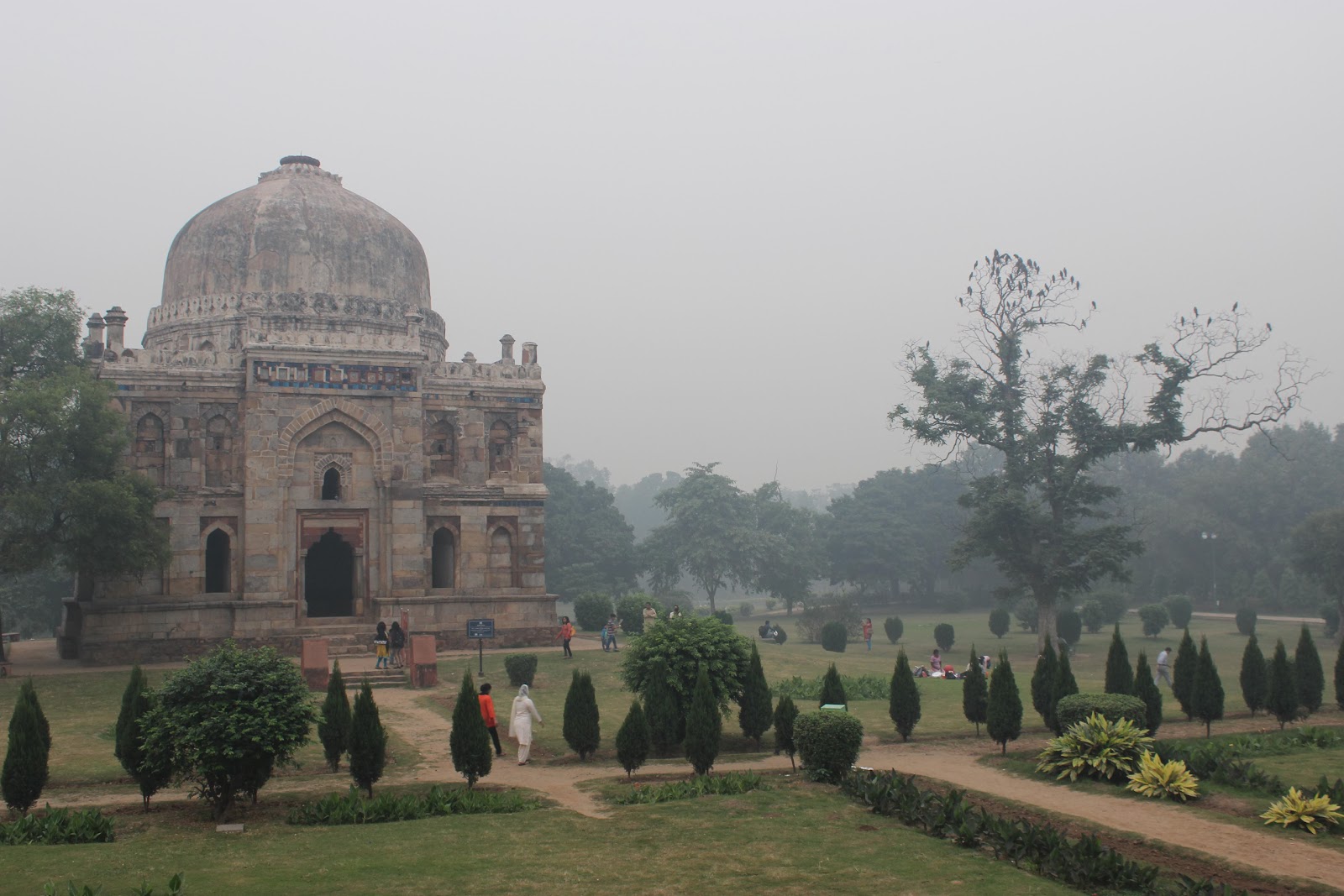 |
| Bada Gumbhad in Lodhi Gardens, Delhi |
 |
| Lotus Temple, Delhi |
 |
| Oarsman at Mathura |
 |
| Taj Mahal, Agra |
 |
| Fatehpur Sikri |
 |
| Parrots at Abhaneri |
 |
| Inside Pura Quila, Delhi |
 |
| Camel at Jaigad, Jaipur |
 |
| Purana Quila, Delhi |
 |
| Sleeping Macaques at Jaigad, Jaipur |
 |
| Guard at Nahargad, Jaipur |
 |
| Lodhi Gardens, Delhi |
 |
| Snake Charmer at Amber Fort, Jaipur |
 |
| Jal Mahal, Jaipur |
Sunday, December 09, 2012
Elephants in Bombay
1) A City Ages
 City:
City:
Mumbai over the past few years has come to be a city that is in a constant state of construction. As if the audacious concretization aspires to compete with the speed and scale of natural deterioration within the city, where built forms catch dust, moss, cracks and crumble, very often at a rate faster than the human bodies that inhabit it. Signs of age seem to climb over every object, building and person like creepers that grow slowly but with a fierce determination rooted in consciousness of the inevitable outcome.
Presently raising the FAR/FSI is seen as a solution to trigger regeneration, but I only wonder what would happen in another 40 to 50 years when these 20 to 25 storey towers grow old and are crumbling, what would be the collateral then? How would the deficit between the true cost of maintenance and affordability based on earning capacities be rationalized What kind of maintenance model will be required if the option of raising FSI is no longer viable? Or will a constant flow of infrastructure projects allow continuous expansion? Either which ways, this dialectics of ageing and reconstruction are here to tango till the bubble bursts or life here becomes unbearably agonizing and people migrate to second tier cities.
Through this turmoil of injections of new infrastructure, new construction, old decaying fabric, the city is in a state of constant change and that too with rapid speed, making it unable for someone to completely be able to grasp or even conjecture the nature of an intermediate state it tries to evolve towards.
 Most of the spaces of my childhood memories have been forgotten by the city only to be replaced by skeletal concrete monoliths that form a wall depriving the city the very symbol of future hope, the line where the sea and sky meet, the horizon.
Friends:
Most of us are now old enough to savour nostalgia, a feeling that comes when the balance between past reaches a critical limit in relation to the future, enjoying memories of what it used to be like and city that Bombay once was and how it has come to be Mumbai. The utopian optimism of being able to fight back, small intervention-big change attitude has been replaced by either proposals that are geared towards damage control (Zizek's capitalism but with a human face) or intense mapping exercises (AMO's this is the present, now and here and no use resisting it), and so interestingly most sentences in most conversation seem to start with the word "interestingly", summing up the total disconnection that professionals have from the built environment, restricted to purely being witnesses that record, re-record and represent these recording in subversive ways to balance the guilt of impotency.
Like everything else, age has caught up if not with them then with people close to them, as they try to find solutions to the state of ageing in this city.
 Grandparents:
My grandmother who has crossed 85, recently moved in our home. Her frail and fragile body bears witness to this city she lived in, her entire life, Dadar Shivaji Park (1937 to 1951),Thane Charai (1951 to 1960), Goregaon Pandurangwadi (1960 to 1962), Cotton Green Kala Chowki (1963 to 1985), Mulund (1986 to 2012),Borivali (2012 onwards). Having short term memory she constantly enquires of her grandchildren once an hour which my father patiently responds to, in manner as if the question was never asked before.
My maternal grandfather lives with my aunt and struggles through with similar problems of age.
This state of vulnerability and return to innocence according to me is the most merciless but yet in some ways appropriate form of redemption to our existence, and deserves the dignity that this fast paced, aggressive city very often cannot afford.
 A Thesis on old age homes:
A friend of mine, Namrata Kapoor, few years back had researched and designed an old age home as a thesis topic. One of the issues that she dealt with was the relevance of having old age and its supporting institutions within the city and and not exiled outside the city limits as is the case with lots of old age homes here. I wonder given the changes that have taken place within this city and the aggression that seem to increase exponentially with increase in density and shortage of resources, would the question of "is old age relevant to this city?" needs to be reframed as "is this city relevant for old age?"
The process/state of ageing here is not a noble one, dignified with responsibilities of holding our collective past, neither is it Clint Eastwood commanding respect and a farewell with a finale, rather it is a sad process of decay and suffering and old age only inhibiting memories...bearing witness to this nature of change to me is somewhat like asking a grandparent do you remember me and seeing their eyes desperately search for signs of recognition in your face, just as i search for fast eroding spaces from my childhood in the city of Mumbai.
2) A City comes of Age
Optimism:
As Bombay grows in infrastructure and density, amid all the chaos there seems to be a sense of optimism from some people whom i spoke to, of things changing rapidly (for good or for worse was not of much concern, but the speed), and within that rapidity one has to fish opportunity at the precise moment it jumps towards you (think of Alaskan bears catching salmon). This strange optimism only seems to be growing, as if with a little more toil, little more risk and little more compromises the battle with the city would be won; dreams, desires and aspirations fulfilled. As one of my friend back in Bombay said, over the past 1 year he can see the boom of a booming economy.
 Faith:
Another one explained that a lot of things presently seem to work purely out of good faith, like the experience of crossing a highway and having good faith in the driver that he wont run over you, while the driver having complete faith in you breaking the traffic signal and crossing from unexpected places, so his speed is slow and he is more alert than an average driver abroad.
The complexity that Bombay shelters provides for a constant source of study, research, mapping, representation and interventions, built and unbuilt, professional and academic of various scales. the opportunities and potentials are endless..theunrest will follow..."it is only a matter of time...have faith..."
3) Elephants in the City
 To me witnessing changes in Bombay is like the experience of seeing elephants in the middle of the city. One is immediately struck by awe at the magnificence of the beast, only to dwell on how the animal survives and then looking carefully at damages that the city life has done to it. It is surreal experience with certain sense of strange optimism mixed with melancholia(?). There are no absolutes here, as even elephants dissolve away in the noise and smog of the city.

Mumbai over the past few years has come to be a city that is in a constant state of construction. As if the audacious concretization aspires to compete with the speed and scale of natural deterioration within the city, where built forms catch dust, moss, cracks and crumble, very often at a rate faster than the human bodies that inhabit it. Signs of age seem to climb over every object, building and person like creepers that grow slowly but with a fierce determination rooted in consciousness of the inevitable outcome.
Presently raising the FAR/FSI is seen as a solution to trigger regeneration, but I only wonder what would happen in another 40 to 50 years when these 20 to 25 storey towers grow old and are crumbling, what would be the collateral then? How would the deficit between the true cost of maintenance and affordability based on earning capacities be rationalized What kind of maintenance model will be required if the option of raising FSI is no longer viable? Or will a constant flow of infrastructure projects allow continuous expansion? Either which ways, this dialectics of ageing and reconstruction are here to tango till the bubble bursts or life here becomes unbearably agonizing and people migrate to second tier cities.
Through this turmoil of injections of new infrastructure, new construction, old decaying fabric, the city is in a state of constant change and that too with rapid speed, making it unable for someone to completely be able to grasp or even conjecture the nature of an intermediate state it tries to evolve towards.

Friends:
Most of us are now old enough to savour nostalgia, a feeling that comes when the balance between past reaches a critical limit in relation to the future, enjoying memories of what it used to be like and city that Bombay once was and how it has come to be Mumbai. The utopian optimism of being able to fight back, small intervention-big change attitude has been replaced by either proposals that are geared towards damage control (Zizek's capitalism but with a human face) or intense mapping exercises (AMO's this is the present, now and here and no use resisting it), and so interestingly most sentences in most conversation seem to start with the word "interestingly", summing up the total disconnection that professionals have from the built environment, restricted to purely being witnesses that record, re-record and represent these recording in subversive ways to balance the guilt of impotency.
Like everything else, age has caught up if not with them then with people close to them, as they try to find solutions to the state of ageing in this city.

My grandmother who has crossed 85, recently moved in our home. Her frail and fragile body bears witness to this city she lived in, her entire life, Dadar Shivaji Park (1937 to 1951),Thane Charai (1951 to 1960), Goregaon Pandurangwadi (1960 to 1962), Cotton Green Kala Chowki (1963 to 1985), Mulund (1986 to 2012),Borivali (2012 onwards). Having short term memory she constantly enquires of her grandchildren once an hour which my father patiently responds to, in manner as if the question was never asked before.
My maternal grandfather lives with my aunt and struggles through with similar problems of age.
This state of vulnerability and return to innocence according to me is the most merciless but yet in some ways appropriate form of redemption to our existence, and deserves the dignity that this fast paced, aggressive city very often cannot afford.

A friend of mine, Namrata Kapoor, few years back had researched and designed an old age home as a thesis topic. One of the issues that she dealt with was the relevance of having old age and its supporting institutions within the city and and not exiled outside the city limits as is the case with lots of old age homes here. I wonder given the changes that have taken place within this city and the aggression that seem to increase exponentially with increase in density and shortage of resources, would the question of "is old age relevant to this city?" needs to be reframed as "is this city relevant for old age?"
The process/state of ageing here is not a noble one, dignified with responsibilities of holding our collective past, neither is it Clint Eastwood commanding respect and a farewell with a finale, rather it is a sad process of decay and suffering and old age only inhibiting memories...bearing witness to this nature of change to me is somewhat like asking a grandparent do you remember me and seeing their eyes desperately search for signs of recognition in your face, just as i search for fast eroding spaces from my childhood in the city of Mumbai.
2) A City comes of Age
Optimism:
As Bombay grows in infrastructure and density, amid all the chaos there seems to be a sense of optimism from some people whom i spoke to, of things changing rapidly (for good or for worse was not of much concern, but the speed), and within that rapidity one has to fish opportunity at the precise moment it jumps towards you (think of Alaskan bears catching salmon). This strange optimism only seems to be growing, as if with a little more toil, little more risk and little more compromises the battle with the city would be won; dreams, desires and aspirations fulfilled. As one of my friend back in Bombay said, over the past 1 year he can see the boom of a booming economy.

Another one explained that a lot of things presently seem to work purely out of good faith, like the experience of crossing a highway and having good faith in the driver that he wont run over you, while the driver having complete faith in you breaking the traffic signal and crossing from unexpected places, so his speed is slow and he is more alert than an average driver abroad.
The complexity that Bombay shelters provides for a constant source of study, research, mapping, representation and interventions, built and unbuilt, professional and academic of various scales. the opportunities and potentials are endless..the
3) Elephants in the City

Sunday, October 14, 2012
The Ball Project
Prajakt Patil a friend and former classmate from KRVIA, has done something which very few of us have been able to, an active on field intervention within the context that we so dearly love and love to talk about.
While we remain bar-tendering each other various bottom up theories of understanding, mapping and intervening in a city like Mumbai without thinking of the interface or re-representation required so that these mappings go beyond the closed socio-economic circles and to the people, community and groups being mapped and represented, Prajakt and his colleague have done just the opposite.
The sheer simplicity of their method and clarity of intent absolves them of any naivety that may get leveled onto them by anyone (bearded academician doing complex mapping exercises to gain funding from contradictory sources but intending to subvert the hierarchy through 'wink wink it could also be read otherwise' paraphrasing).
Vitriol aside, but this is a truly brilliant work that needs all the support and appreciation that it deserves. Here is a slide show that Prajakt was happy to share and explains the aim and method adopted. Truly brilliant work.
Thursday, August 11, 2011
Rooster's Coop
In UK
 (Data from HMRC 2004-2005; incomes are before tax for individuals. The personal allowance or income tax threshold was £4,745 (people with incomes below this level did not pay income tax). The mean income was £22,800 per year with the average Briton paying £4,060 in income tax.
Above are the tax ranges, by population and the percentage they constitute. This income does not cover assets owned.)
The difference in earnings is not a gradual gradient, it reveals numbers that are highly polarised. This rather vulgar statistic with top 5 percent earning 60-70% of the income while the rest having to share from the trickle down scraps according to me is far more violent than the London riots few days back.
A majority of rioters took to looting, as one of the article called them 'disqualified consumers' implying, they too like most of us were consumers but having lost the power to afford had been disqualified. In the absence of any support from the student unions or intellectuals in the city who have distanced themselves from this underclass, the only form of mass unrest possible will be the one with no structure, no intent and no meaning....in complete contradiction to the student protests that took place few months back. This contradiction makes it even more important for the two groups to come together...
While David Cameron made a speech filled with hate, and the opposition Labour leader Ed Miliband seemed to be weighing words completely based on popular public opinion, one person out there somewhere makes complete sense of what happened and why...below is the video of the interview.
In such a scenario I often find myself agreeing with Kostas's argumentum baculinum solutions.

Above are the tax ranges, by population and the percentage they constitute. This income does not cover assets owned.)
The difference in earnings is not a gradual gradient, it reveals numbers that are highly polarised. This rather vulgar statistic with top 5 percent earning 60-70% of the income while the rest having to share from the trickle down scraps according to me is far more violent than the London riots few days back.
A majority of rioters took to looting, as one of the article called them 'disqualified consumers' implying, they too like most of us were consumers but having lost the power to afford had been disqualified. In the absence of any support from the student unions or intellectuals in the city who have distanced themselves from this underclass, the only form of mass unrest possible will be the one with no structure, no intent and no meaning....in complete contradiction to the student protests that took place few months back. This contradiction makes it even more important for the two groups to come together...
While David Cameron made a speech filled with hate, and the opposition Labour leader Ed Miliband seemed to be weighing words completely based on popular public opinion, one person out there somewhere makes complete sense of what happened and why...below is the video of the interview.
Saturday, June 04, 2011
London International Documentary Festival
My friend Mukul had two of his film screenings at the London International Documentary Festival, Vertical City and Certified Universal both of which were being screened at the Horse Hospital. I could make it for the Certified Universal, a beautiful short film with the audience relishing every second of the film as images from films and the city fused together to form Bombay.
I remember reading Berger where he writes there are numerous paintings of water lilies, haystacks, sunflowers and nudes, but only a few come to be truly beautiful where the artist and art merge and are inseparable. For me Certified Universal was one such beautiful film in which I see the city, the film and Mukul, all tightly composed in 14 minutes.
I remember reading Berger where he writes there are numerous paintings of water lilies, haystacks, sunflowers and nudes, but only a few come to be truly beautiful where the artist and art merge and are inseparable. For me Certified Universal was one such beautiful film in which I see the city, the film and Mukul, all tightly composed in 14 minutes.
Sunday, April 03, 2011
Sustainability as defined by Multinationals
According to Novelist Edward Docx "In the forest, there are no horizons and so the dawn does not break but is instead born in the trees – a wan and smoky blue."
Here are fragmentary excerpts from an ongoing story of one such forest, The Niyamgiri and its inhabitants who call themselves Jharnia translating as 'protectors of streams' waging a struggle against a UK based multinational and their own government.
A, B, C, D, D2 and some other stories E, F.
...meanwhile in other places strange coincidences make wars for freedom worth the effort.
I have come to believe that these days most contradictions lie blatantly out in the open, it will just take one twig to snap and start a forest fire.
Here are fragmentary excerpts from an ongoing story of one such forest, The Niyamgiri and its inhabitants who call themselves Jharnia translating as 'protectors of streams' waging a struggle against a UK based multinational and their own government.
A, B, C, D, D2 and some other stories E, F.
...meanwhile in other places strange coincidences make wars for freedom worth the effort.
I have come to believe that these days most contradictions lie blatantly out in the open, it will just take one twig to snap and start a forest fire.
Tuesday, March 08, 2011
Watercolours

I received this in my inbox today sent by a friend. If you are in Bombay and you were a student of Architecture or Arts sometime during the past 20 years, then this is an exhibition you would not want to miss.
Here is the rest of text from the email:
"Kamla Raheja Foundation presents an Exhibition of Prof. Shriniwas Kudalkar's Water Colours and Illustrations.
Shriniwas Ramchandra Kudalkar (b. 1934) is an alumnus of Sir JJ School of Architecture (Batch of 1954). Fondly called Kudalkar Sir, he is a teacher par excellence who has been teaching at KRVIA for the past seventeen years since 1994. He has also taught at Sir JJ School of Architecture since 1964. He is an inspiration for students and colleagues by virtue of his ability to craft each of his Building Technology lectures- beginning with the plans and fleshing out the details thus bringing to life the process of construction.
Not many people know that before commencing his education as an architect, he had already completed a certificate course in fine arts and also apprenticed with a commercial artist. His students at the JJ school in his early years of teaching have had the good fortune to witness him painting during their study tours.
On behalf of the Kamla Raheja Foundation, It is with immense pleasure that we announce a public exhibition of his paintings in at least three locations beginning at KRVIA- 10th to 17th March 2011 (1pm to 7pm except on Sunday).
An inaugural function of the exhibition reminiscing his earlier years of teaching will be held at the KRVIA on 10th, thursday at 3pm, followed by tea at 4:30pm.
Out of a collection of 174 of the surviving paintings in his possession, we have selected around 50 paintings and a few artworks and illustrations."
I hope I get to see some images from the exhibition.
Friday, May 14, 2010
Kochi (Cochin) and Kozhikode (Calicut)

(The Chinese fishing nets along Kochi coast look like elaborate apparatus to do something more than simply catch fish, but this is one of the many living artifacts that have survived and become a part of everyday life here.)
Nora's first time visit to India started with us taking a fast-short trip to Kerala, specifically to two very beautiful town-cities Kochi and Kozhikode with travelling Sahil as our host, translator and glocal guide. This was my first trip to Kerala and had the best time.

A continuous blanket of dense tropical cover growing over red laterite soil, every now and then sparing space for houses, roads and small town centres that occur with calculated uniformity throughout the state get purged together by the heavy humid air that seems to blur boundaries between forest and the city. The two cities mostly lay hidden among the multi-storeyed emerald green foliage anchored to the sky by coconut palms and towering over a lush ecosystem inhabited by purple crested, yellow winged, orange bottomed birds, lizards and mammals all chirping, hooting, singing and laying equal claims to this "gods own country" and all spotted, classified and explained in precise detail by Sahil. The climate and soil lay the stage for fertility and its worship, nature grows and devours at the same pace that all man made gets eroded, corroded, mossed over adding to the green that seems to envelope and seep through just about every thing.

Kuttichira Jami Masjid in Kozhikode with its skew that changes the axis of the street.

(Sahil explained that this mosque, one of the many old mosques present in Kerala built by the Arab traders who were then provided to settle and have families here by the then ruler the Zamorins comes up in a time when Islam has not formalised its Islamic Architecture and so these mosques look completely different from present day mosque. Moreover the architecture of these mosques is also influenced by the local artisans and craftsmen more at comfort with making boats & Asian temples.)
Both the cities are port cities and have their genealogy influenced by global trade that assured their place in stories by travellers, map makers, explorers and historians. A place visited by Arabs, Chinese, Portuguese, Jews and many more people from different places which hadn't become nations, belonging to faiths that hadn't become religions and all in search of places that hadn't been seen on world maps. These two cities certainly took roots in a time when the world had a place for curiosity and cultures mixed more seamlessly, with one of the oldest Jewish synagogues having its floor adorned by Chinese tiles, some of the oldest mosques having pitched roofs and ornamentation done by Hindu boat making artisans, Portuguese churches responding to tropical climate, fishermen using Chinese fishing nets and Indian spices unifying all these differences, that got traded and bartered along the silk route.The experience of seeing oldest institutions, housing typologies, neolithic carvings, endemic flora and fauna and many other artifacts from a stage where man, nature and civilizations were swimming in primordial soup of forming our present is no short of magic, like an archeologist's dream of time evidenced by living fossils.

(The pedestrian path to the Jewish synagogue presently serves as a flea market for tourists but has very interesting shop and house typologies that contain elaborately carved and conserved smaller artifacts like wooden posts, statues, doors, windows, brass handles etc.)
The Jewish synagogue is a very good example of one such architecture formed out of mixing of historic and cultural narrative. The synagogue was originally built around 4th century by the Malabari Jews who had come to be a prosperous trading community in Kerala. This synagogue was destroyed by the Portuguese in 1500s. The second synagogue was built through Dutch patronage and with protection from the Raja of Cochin and so came to be known as Paradesi synagoge which translates as foreign synagogue.

(A houseboat on the Kochi backwaters.)
The Backwater is a labyrinth of lakes, canals, dykes, islands, rivers all separated and connected by nature and man strategically to channel tidal sea water and inland freshwater to form a very unique ecosystem of fantastic natural beauty. This was one of the highlights of the trip, that allowed us tourists to voyeur into this ecosystem while the locals went about their everyday lives.P.S. Somewhere out there in Kerala is a grandma who makes the best prawn pickle, which I prescribe as the top of the list food that you pack in case of a nuclear winter, apocalypse, or in everyday life. Happiness guaranteed even if you don't see the sun for the rest of your life!
Friday, October 16, 2009
Two Articles
2 very good articles by Arundhati Roy:
1) The Monster in the Mirror
Which is on the terrorist attack that took place in Bombay (hope the MNS isn't here)
2) The Greater Common Good
On the Narmada Dam project, forwarded to me by Aditya Sudhakar (Pottu).
update to the above post:
I found an article written by Ramachandra Guha reacting to Arundhati Roy's above article Greater Common Good...his article titled: The Arun Shourie of the Left
...to which she reacts in the following interview: Scimitars in the Sun
1) The Monster in the Mirror
Which is on the terrorist attack that took place in Bombay (hope the MNS isn't here)
2) The Greater Common Good
On the Narmada Dam project, forwarded to me by Aditya Sudhakar (Pottu).
update to the above post:
I found an article written by Ramachandra Guha reacting to Arundhati Roy's above article Greater Common Good...his article titled: The Arun Shourie of the Left
...to which she reacts in the following interview: Scimitars in the Sun
Subscribe to:
Posts (Atom)